
Book Appointment Now

About His Majesty King Ziyane Manana II
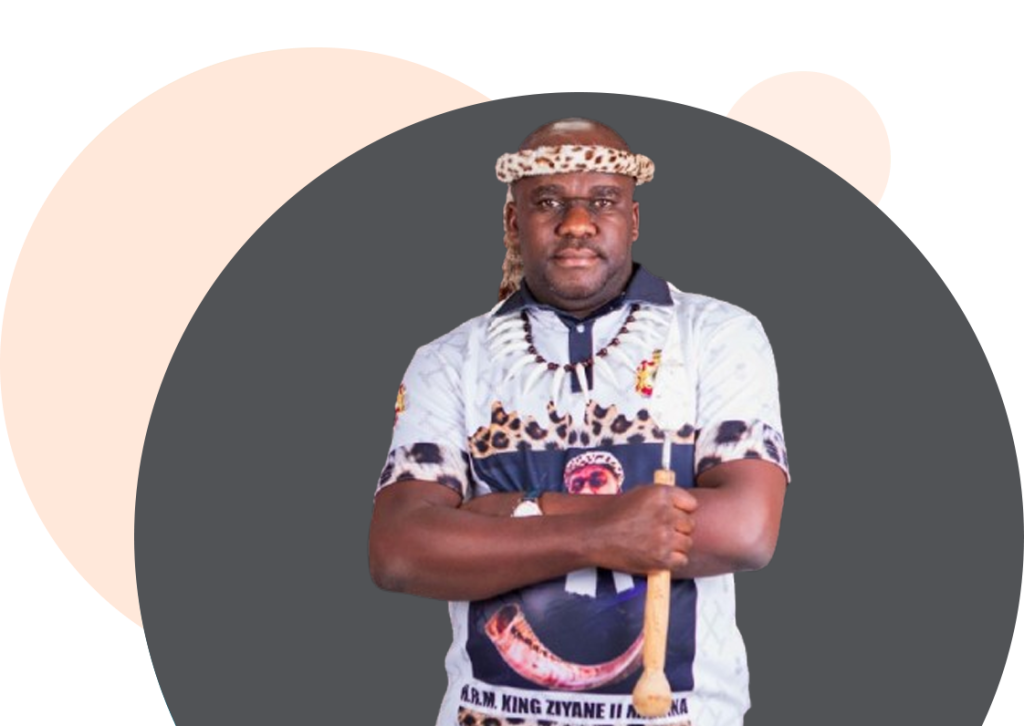

King Ziyane Manana II
born in 1978, is the revered and respected monarch of the Manana Royal Kingdom. As a custodian of his people’s heritage and culture, he embodies the values of wisdom, strength, and resilience. His leadership continues to inspire unity and progress in his kingdom.
King Ziyane Manana II is the direct descendant of a long line of great leaders, and his royal lineage has been preserved through generations. In his role, King Ziyane focuses on ensuring the welfare of his people by preserving the traditions, culture, and values that have defined the Manana Kingdom for centuries.
Personal life and education
King Ziyane Manana II’s upbringing was deeply rooted in his cultural heritage. Growing up within the royal court, he received education that emphasized both modern leadership and traditional practices. His studies included subjects that fostered his understanding of governance, history, and social dynamics, ensuring his ability to lead with both modern insight and deep respect for his ancestry.
While King Ziyane’s academic background was shaped by international exposure, his profound understanding of his people’s traditions gives him a unique advantage as a monarch. He often participates in educational initiatives to help younger generations learn about their heritage and values.
The history of the Manana Royal Kingdom is deeply rooted in ancestral legacy, migration and resilience.
According to our oral history, the origins of the Manana lineage trace back to East Africa, particularly Ethiopia. The founding figure, King Ziyane the First, who was born in 1965, was originally known as Mana. As he journeyed south into Southern Africa, he became known as Manana, establishing a Kingdom and identity that would carry through generations.
During his reign, he led with strength and vision, laying the foundation of a Kingdom built on unity, cultural identity, and spiritual alignment. However, in 1765, his life was tragically cut short during colonial conflict, where he was killed and decapitated, and his head taken to Britain as a symbol of conquest. This marked a turning point in the history of the Kingdom, as its leadership structure and visibility were disrupted.
Over time, the Kingdom became less visible, and its history was preserved mainly through oral tradition, ancestral memory, and spiritual continuity rather than formal written records.
The present moment represents a period of restoration. Through ancestral calling and spiritual guidance, the legacy of the Manana Royal Kingdom is being revived, reconnecting scattered clans, re-establishing leadership structures, and restoring cultural practices that define who we are.
This restoration is not only about reclaiming the past, but about building a future where the Manana people are united, recognized, and empowered, while remaining rooted in their identity and heritage.